The Horse Cart Philosophy: Why Great Leaders Never Forget Their Roots
Everyone has a horse cart moment – a time when they had the choice to stay comfortable or engage with the real world. The leaders who choose engagement, who choose connection, who choose to stay grounded while building their empires – these are the leaders who create lasting impact.
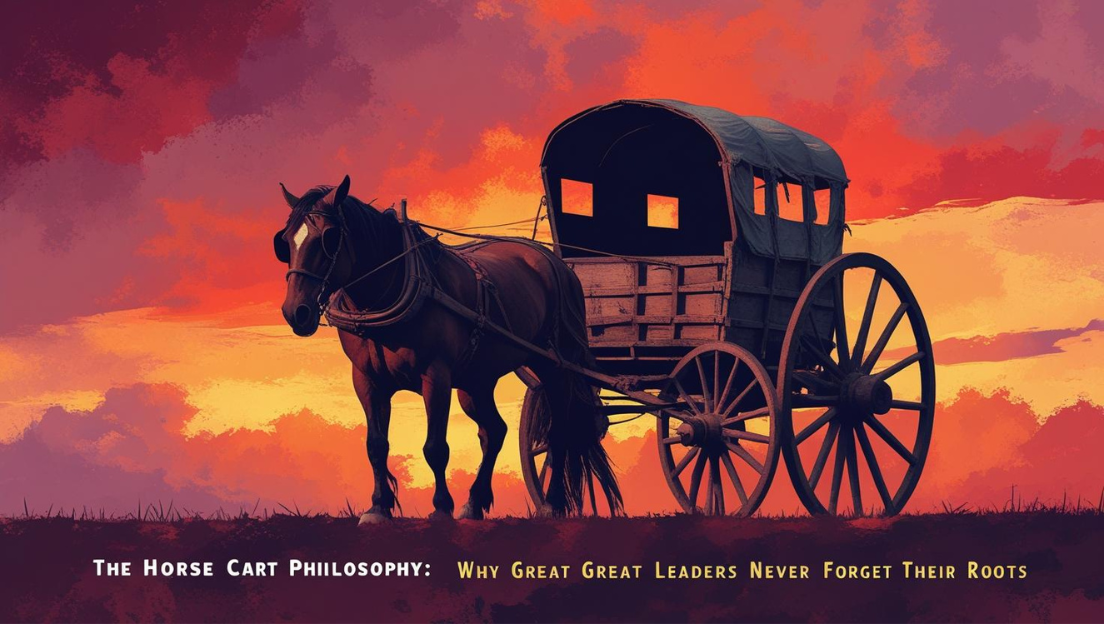
At eight years old, I made a decision that would shape my entire approach to business and leadership for the next three decades. Against my father 's initial hesitation and despite the puzzled looks from family friends, I insisted on riding alongside our workers as they delivered catering equipment on horse carts through the bustling streets of Karachi. "Boss ka beta kyon workers ke saath baithna chahta hai?" they whispered among themselves. Why does the boss 's son want to sit with the laborers? But that two-hour journey through Karachi 's narrow lanes taught me more about authentic leadership than any business school ever could. THE BEGINNING OF UNDERSTANDING As our horse cart navigated through the crowded streets, I wasn 't just observing – I was absorbing. I learned the name of every worker, heard their stories, understood their daily challenges. I saw how they interacted with customers, witnessed their dedication despite modest wages, and observed their pride in delivering quality service. Most importantly, I discovered that respect isn 't earned through titles or positions – it's earned through character and genuine care for others. This wasn 't just childhood curiosity. It was my first masterclass in ground-level leadership. FROM HORSE CARTS TO CORPORATE HALLS Fast forward 28 years, and that eight-year-old boy who refused to stay in the comfort of his father 's office is now running one of Karachi's top 5 co-working spaces. Work More isn't just successful because of its location or facilities – it thrives because of the culture we've built, rooted in that horse cart philosophy. Every morning, I still walk the floor. I know every member by name. I understand their business challenges, celebrate their victories, and support them through their struggles. While other business owners manage from boardrooms and corner offices, I manage from the heart of the action. This approach has created something magical at Work More. Our 78% occupancy rate isn 't just a number – it's a testament to what happens when leaders stay connected to their community. THE HORSE CART PRINCIPLES THAT BUILT AN EMPIRE 1 . Ground-Level Perspective : You can 't lead effectively from an ivory tower. Real insights come from real interactions with real people facing real challenges. 2 . Authentic Relationships : When you genuinely care about people 's success, they'll move mountains for your vision. This isn't manipulation – it's authentic relationship building. 3 . Operational Understanding : Knowing how every aspect of your business actually works, not just how it looks on paper, gives you the wisdom to make better decisions. 4 . Respect Without Hierarchy : True respect flows both ways. The janitor 's perspective can be just as valuable as the CEO's insight. 5 . Cultural Foundation : When your leadership style is rooted in genuine care and connection, it creates a culture that attracts the right people and repels the wrong ones. APPLYING THE PHILOSOPHY ACROSS INDUSTRIES This philosophy hasn 't just worked for Work More. Throughout my entrepreneurial journey – from Pakistan's first cyber café to the world's 22nd e-commerce platform to Asia's first smartphone film festival – the horse cart principle has been my guide. When I launched Beliscity.com in 2001 , I didn 't just build an e-commerce platform. I spent time understanding exactly how Pakistani consumers wanted to shop online, what their concerns were, and how to build trust in a market that had never experienced digital commerce. When we created the smartphone film festival, I didn 't just organize an event. I traveled across Pakistan, training young filmmakers, understanding their challenges, and creating opportunities for voices that had never been heard. Every "Pakistan's First" I achieved was possible because I never forgot the horse cart lesson: stay close to the people you 're serving. THE MODERN LEADERSHIP CRlISIS Today 's business world is facing a leadership crisis, and I believe it stems from leaders who have lost touch with their horse cart moments. They manage through dashboards and reports, make decisions in closed boardrooms, and wonder why their teams lack engagement. The solution isn 't more sophisticated management tools or complex leadership theories. It's simpler than that: get back on the horse cart. - Walk among your team regularly, not just during crises - Understand the daily reality of your customers ' experiences - Listen more than you speak in every interaction - Celebrate the people who make your success possible - Never let success distance you from the ground-level truth PRACTICAL STEPS FOR EVERY LEADER Whether you 're running a startup or managing a department, here's how to implement the horse cart philosophy: Weekly Ground Rounds : Spend at least two hours weekly at ground level – with your front-line team, your customers, or your community. Name Recognition : Know the names and stories of people at every level of your organization. This isn 't just politeness; it's strategic relationship building. Decision Inclusion : Before making major decisions, gather input from people at different levels, not just your senior team. Success Sharing : When celebrating victories, always highlight the contributions of people who made it possible. Problem Solving Together : When challenges arise, work alongside your team to solve them, not just delegate from above. THE LEGACY OF A PHILOSOPHY As I reflect on 28 years of entrepreneurship, every major success traces back to that horse cart ride. The relationships I built, the insights I gained, and the leadership style I developed all stem from an eight-year-old 's decision to sit with the workers. Today, as Work More members tell me "Boss, aap inspiration ho!" (Boss, you are an inspiration!), I 'm reminded that inspiration doesn't come from impressive titles or corner offices. It comes from staying true to the values that shaped you. The horse cart philosophy isn 't just about business success – it's about human success. It's about building something that matters, creating value for others, and never forgetting that every achievement is possible because of the people who believed in your vision. CONCLUSION: YOUR HORSE CART MOMENT Everyone has a horse cart moment – a time when they had the choice to stay comfortable or engage with the real world. The leaders who choose engagement, who choose connection, who choose to stay grounded while building their empires – these are the leaders who create lasting impact. What 's your horse cart story? When did you choose to engage rather than observe? And more importantly, are you still making that choice every day? The boy who rode horse carts became the man who builds Pakistan 's firsts. But more than that, he became a leader who never forgot where he came from. That 's the difference between success and significance. That 's the horse cart philosophy. --- Abid Beli is a serial entrepreneur, Guinness World Record holder, and CEO of Work More co-working space. Follow his journey on LinkedIn and Facebook as he shares insights from 28 years of building Pakistan 's first digital businesses.